
Personalized Shopping Experience Increases AOV

Many ecommerce stores focus on getting more traffic assuming it means more revenue. But revenue does not always grow with traffic.
Increasing the amount each customer spends per order can significantly grow revenue without spending a penny on acquiring traffic. This metric is average order value (AOV).
Personalization increases average order value by recommending relevant products based on customer demographics, behavior, preferences, and purchase history. This makes additional purchases more natural, increasing their cart value.
Instead of pushing customers to spend more, personalization helps them find what they already need.
If you are new to the concept, this guide on average order value (AOV) explains how businesses calculate and improve AOV.
Here we’ll talk about personalization and how it helps AOV.
What Is Personalization in eCommerce?
Personalization in ecommerce means giving each shopper an experience that reflects their behavior, preferences, and context rather than showing everyone the same thing.
This looks like:
- Behavior-based recommendations: Showing products based on what someone has browsed, clicked, or purchased before.
- Tailored promotions: Offering discounts or bundles that match a customer’s purchase history.
- Dynamic product suggestions: Showing related or complementary products at the right moments in the shopping journey.
- Personalized bundles: Curating product sets based on what similar customers buy together.
- Location-based experience: Product catalogue, website navigation, checkout, and shipping cost reflecting where customers reside.
Personalized marketing uses customer data to make every touchpoint feel more relevant.
How Personalization Increases Average Order Value
There is real psychology behind the connection between personalization and AOV.
Product recommendations
A product recommendation should make people feel like “this is what I need.”
You have seen one of the following at least once when online shopping:
- Customers also bought
- Frequently bought together
- Recommended for you
- Based on your browsing history
Recommending a tripod alongside a camera or a moisturizer to go with a cleanser requires little convincing. The combination simply makes sense.
Personalized product recommendations can drive up to 5-15% higher revenue per session.
Recommended For You!
| Product Bundle | Individual Price Total | Bundle Price | You Save | Visit |
|---|---|---|---|---|
| Laptop + Mouse | $1,050 | $950 | $100 | Details... |
| Laptop + Mouse + Keyboard | $1,200 | $1,000 | $200 | Details... |
| Laptop + Mouse + Keyboard + Monitor | $1,800 | $1,100 | $700 (!!!) | Details... |
| Laptop + Full Office Setup (All 4) | $2,200 | $1,200 | $1000 ⭐ | Details... |
| Laptop + Chair + Desk | $1,800 | $1,400 | $400 | Details... |
| Ultimate Productivity Pack (All) | $2,500 | $1,600 | $900 🔥 Best Value! | Details... |
People are more likely to purchase an additional item when recommendations match their intent.
Customily’s research on live product personalization found that customers who engage with personalized recommendations have significantly higher AOV than those who do not.
Personalized product bundling
Bundling is one of the most effective AOV tools available, and personalization makes them even more powerful.
Instead of a static bundle that every customer sees, dynamic bundles adapt based on what the shopper has already added to their cart.
A returning customer who has bought a starter kit might see a bundle that upgrades their setup. A first-time buyer might see a bundle that helps them get started faster.
| Product Bundle | Individual Price Total | Bundle Price | You Save | Visit |
|---|---|---|---|---|
| Laptop + Mouse | $1,050 | $950 | $100 | Details... |
| Laptop + Mouse + Keyboard | $1,200 | $1,000 | $200 | Details... |
| Laptop + Mouse + Keyboard + Monitor | $1,800 | $1,100 | $700 (!!!) | Details... |
| Laptop + Full Office Setup (All 4) | $2,200 | $1,200 | $1000 ⭐ | Details... |
| Laptop + Chair + Desk | $1,800 | $1,400 | $400 | Details... |
| Ultimate Productivity Pack (All) | $2,500 | $1,600 | $900 🔥 Best Value! | Details... |
For a deeper look at how bundles work across different business models, this guide to bundle marketing for businesses is worth reading.
Personalized upsells and cross-sells
Upselling means suggesting a premium version of what the customer is already considering. Cross-selling means recommending related products that complement the main purchase.
Both are more effective when they are personalized.
A plain “upgrade to Pro” sticker is easy to ignore.
But a suggestion that says “customers who bought this laptop also picked up this wireless mouse and keyboard” — much harder to ignore.
For example:
- Customer adds a laptop → suggest a wireless mouse and mechanical keyboard
- Customer adds a yoga mat → suggest resistance bands, foam roller, and water bottle
The logic is simple: when customers see relevant add-ons at the right moment, they are far more likely to expand their cart.
Personalized promotions
Not every promotion needs to go to every customer. In fact, blanket discounts often train customers to wait for sales rather than buying at full price.
Personalized promotions target the right customer with the right offer:
- First-time visitors might see a welcome discount
- Returning customers who haven’t purchased in 60 days might get a win-back offer
- High-value buyers might receive early access to new products
- Customers who abandoned a cart with a high-value item might get a time-sensitive nudge
| Offer Type | Description | Examples |
|---|---|---|
| Spending Level Discount | Discounts based on total spending or high AOV customers. | “Great! You’ve spent $300 this month — enjoy 15% off your next order!” |
| Loyalty Bonus | Rewards for returning or VIP customers. | “Thanks for being with us for 1 year! We'd like to thank you with a special gift for being a reliable member of our family” |
| Interest-Based Discount | Offers matched to the customer’s browsing categories or interests. | “Looks like you're into home office gear. Would you like a 10% off on ergonomic chairs today?” |
| First-Time Buyer Discount | Special discount given on a customer's first purchase. | “Welcome! Thanks for signing up! Enjoy 20% off on your first order.” |
| Seasonal Offer | Promotions tied to events, holidays or peak seasons. | “Black Friday Sale — up to 50% off selected categories!” |
| Referral Bonus or Gift | Coupons or gifts given when a customer refers a friend. | “Refer a friend and get a $10 gift card when they make their first purchase.” |
This approach increases AOV by guiding customers toward higher-value purchases rather than simply closing the sale.
Reduced decision friction
One underrated reason carts stay small: customers do not know what else to buy. They came for one thing, bought it, and left.
Personalization removes that friction.
Instead of expecting customers to browse and discover on their own, you show the right complementary products at the right moment. Now they know which products work best together and add them to cart.
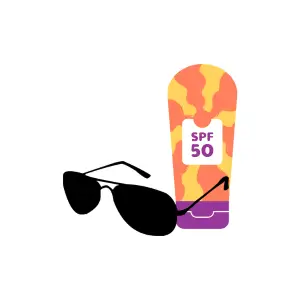
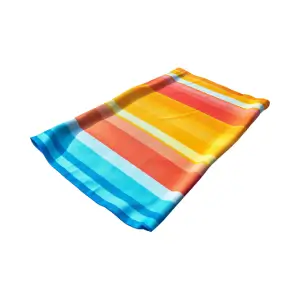
Here’s dummy product table with hand-picked Summer season essentials. Customers can choose to buy a beach towel if they’re buying slippers. It’s all curated in one table.
| Image | Name | Category | Price | Quantity | Buy |
|---|---|---|---|---|---|
 | Beach essentials | Summer | Original price was: $50.00.$38.00Current price is: $38.00. | | |
 | Beach slippers | Summer | $15.00 | | |
 | Beach towel | Summer | $33.00 | | |
 | Beach hats | Summer | $28.00 | |
Courtesy of Ninja Tables
Higher perceived value
A well-timed bundle or upgrade does not feel like an upsell. When someone is already in buying mode and sees a product that completes their purchase, the perceived value of the whole transaction goes up.
Get in touch with Ninja Tables
Personalization in the Customer Journey: Where It Works Best
Personalization is not a single moment. It works across the entire ecommerce customer journey.
Here is where it tends to have the most impact on AOV:
Product pages
This is where intent is highest. A customer looking at a specific product is already in buying mode. Showing complementary items here (either through a recommendation widget or a comparison table) captures that intent before it fades.
Intersport saw 4% AOV increase after implementing behavior-driven recommendations.
Cart page
The cart page is prime real estate for AOV growth. Customers are about to buy. Recommending one or two add-ons at this stage, especially at a lower price point, pushes conversion. Keep suggestions relevant and do not overwhelm.
Checkout
Last-minute bundles or small upgrades at checkout can work well if they are planned well.
A single, well-targeted offer (“Add a 2-year warranty for $12”) requires minimal thought and can meaningfully increase order value without disrupting the checkout flow.
Post-purchase
This is often overlooked. A well-timed post-purchase email recommending products that complement the recent order is low-effort and high-return. It also sets the stage for a higher AOV on the next order.
Real Examples of Personalization Increasing Order Value
Many brands increase average order value by using some personalization tricks like purchase incentives, intent-fit recommendation, behavior-based tailoring and more.
Example 1: Sephora
Sephora uses customer data collected from the Beauty Insider loyalty program to deliver:
- Personalized product recommendations
- Targeted promotions
- Customized emails
- Beauty profile–based suggestions
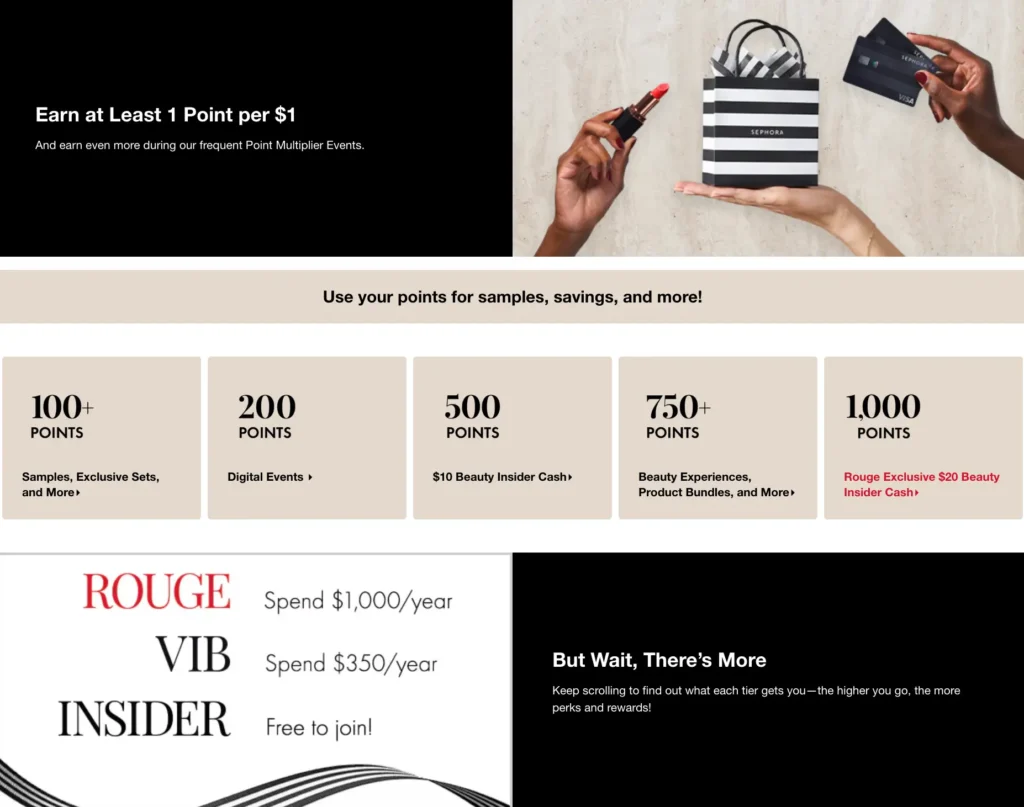
They segment customers into three tiers based on how much they spend: Insider, VIB, and Rouge.
Higher tiers unlock exclusive rewards, early access, and special events, which motivates them to buy more.
Example 2: Philips
Philips increased AOV by using onsite personalization: behavior-based product recommendations, social proof messages, and a free-shipping progress bar that encouraged customers to add more items to their cart.
Example 3: Intersport
Intersport saw 4% AOV increase after implementing behavior-driven recommendations. Instead of showing the same promotions to every visitor, they used location-based triggers to tailor product recommendations and banners according to the weather in each shopper’s area.
How to Personalize Your Store
You do not need a massive tech stack to get started.
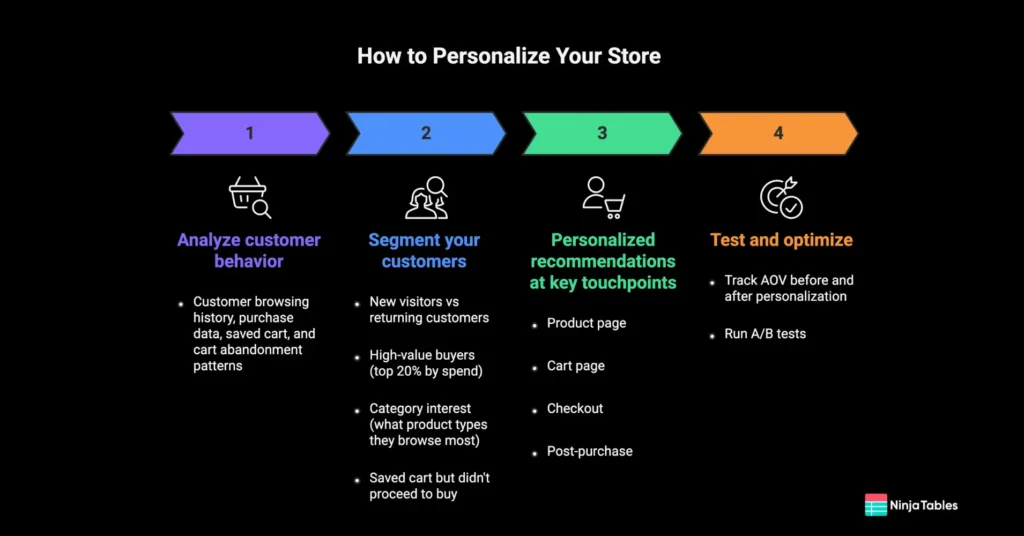
Here is a practical sequence:
Step 1: Analyze customer behavior
Look at customer browsing history, purchase data, and cart abandonment patterns.
For example, if a customer frequently buys a sunscreen but rarely buys a moisturizer with it, it’s a clear opportunity for a recommendation or bundle.
Step 2: Segment your customers
Not all customers are the same. Segment by:
- New visitors vs returning customers
- High-value buyers (top 20% by spend)
- Category interest (what product types they browse most)
Even basic segmentation dramatically improves relevance.
Step 3: Personalized recommendations at key touchpoints
Start with product and cart pages as these have the highest AOV impact. Use your platform’s built-in recommendation features, or integrate a dedicated personalization tool.
Product comparison tables help shoppers quickly evaluate bundles, upgrades, or feature differences. Online stores can present these comparisons in an interactive format using tools like Ninja Tables, helping shoppers make faster purchase decisions.
Product Comparison Table
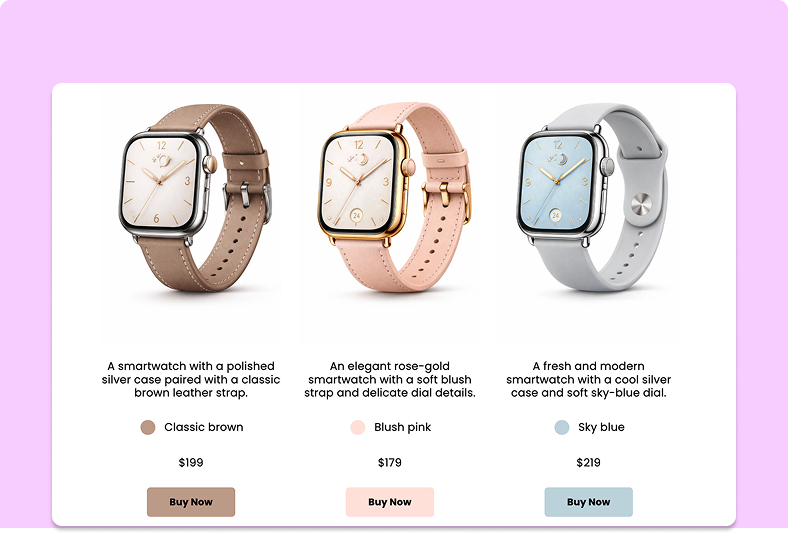
Product Variation Comparison

3 Column Comparison
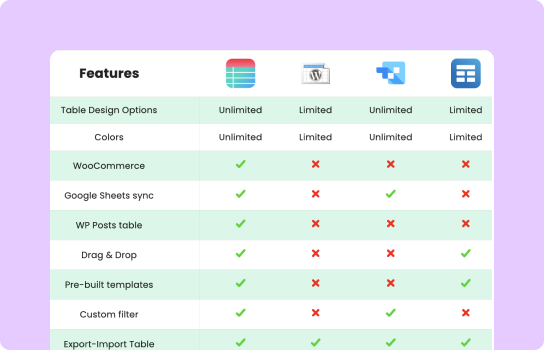
Side-by-side Comparison
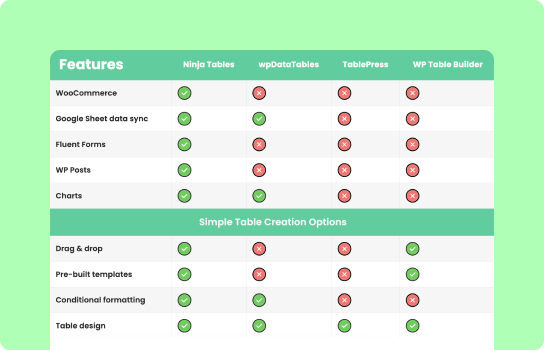
Product Feaure Comparison
Step 4: Test and optimize
Track AOV before and after implementing each personalization layer. Run A/B tests where possible. Personalization that works for one store’s audience may need adjustment for another.
How to Measure Personalization’s Impact on AOV
Four metrics to watch:
Metric | What It Tells You |
Primary indicator: Average Order Value | Shows whether personalization is increasing the amount customers spend per order |
Cart Size (items per order) | Indicates if customers are adding more products to their cart |
Conversion Rate | Confirms personalization is helping purchases rather than creating friction |
Repeat Purchase Rate | Shows whether personalized experiences are building long-term loyalty |
AOV is the primary indicator, while cart size shows whether personalization is encouraging customers to add more items per order.
If customers are adding more items but at lower prices, you may need to shift your recommendation strategy toward higher-margin products.
Common Personalization Mistakes to Avoid
- Irrelevant recommendations: A customer buying office chairs does not need to see laptop stands from a completely different category. Generic suggestions train customers to ignore recommendations entirely.
- Too many suggestions at once: Showing 12 “recommended products” creates choice paralysis. Keep it focused: two to four well-chosen suggestions.
- Ignoring actual customer behavior: Personalization built on actual data outperforms personalization built on assumptions.
- Aggressive upselling: If every touchpoint feels like an upsell attempt, customers notice. The best personalization feels helpful, not pushy.
- Being intrusive: If personalization becomes too precise and gathers data without consent, customers feel uncomfortable.
FAQs
How to use personalization to improve average order value?
Start by analyzing customer behavior and segmenting your audience. Then add personalized recommendations on product pages and cart pages, introduce dynamic bundles, and use targeted promotions for specific segments. Track AOV changes after each layer to see what moves the needle for your store.
How does personalized product recommendation increase AOV?
Live personalization and product recommendation shows the right product when the moment a customer is actively engaged. When recommendations are real-time and behavior-driven, adapting to what the customer just browsed or added to cart, the likelihood of adding another item increases significantly.
What are examples of ecommerce personalization?
Common examples include “Customers also bought” widgets, personalized bundle recommendations, behavior-triggered promotions, dynamic upsell offers at checkout, and post-purchase email recommendations based on recent purchases.
How does personalization increase sales?
Personalization increases sales, conversion rates, and cart size. The impact is strongest when product recommendations are driven by actual behavioral data rather than static or category-level rules.
How can personalization improve ecommerce conversions?
Beyond AOV, personalization improves conversions by making the path to purchase shorter. When customers quickly find products that match their intent, they spend less time searching, experience less decision fatigue, and are more likely to complete their purchase.
Key Takeaways
Personalization helps customers discover products they already need, which naturally leads to larger carts.
Relevant recommendations, dynamic bundles, and targeted promotions remove friction and guide customers toward better purchase decisions.
When combined with strategies like bundling and customer journey optimization, personalization becomes one of the most reliable ways to increase average order value — without increasing traffic.
The ecommerce stores that grow AOV consistently are not always the ones with the most products or the lowest prices. They are the ones that make every customer feel like the store understands exactly what they came for.

Ninja Tables– Easiest Table Plugin in WordPress


Add your first comment to this post